
Washita County VINELink Coverage
Oklahoma VINE is the state's confidential, automated custody information and notification service. It offers access through VINELink, a mobile app, and the statewide phone line at 1-877-654-8463. The service can carry release, transfer, and other custody changes supplied by a participating agency. Oklahoma's official material does not publish a complete facility-by-facility participation list, however. A live result must name Washita County Jail or the expected ODOC facility before it can answer a Washita County custody question.
The system tracks the custody of the named reporting agency. If a Washita County result changes to released or out of custody, that event means Washita's reported custody ended. It does not rule out an immediate transfer to ODOC, Comanche County, a tribal authority, another state, or another holder. A transfer event is clearer: custody continued somewhere else. Those distinctions matter because the local jail often holds people for more than one authority.
Oklahoma describes VINE custody checks as anonymous and available at all hours through the automated service. Live assistance is also described as multilingual. Those access choices help when web access fails or a safety plan calls for more than one contact route. They do not change the need to match the record. The person, state, and reporting agency must all align before a Washita County custody event can be read with confidence.
Washita County VINE Parole Notices
The Oklahoma Pardon and Parole Board's VINE program also describes notices tied to release to parole and advance hearing information. The Board's own notification list remains separate. Contact details must be kept current in each program when both are used.
The official Oklahoma VINE page shows the statewide access channels and explains the service's role.
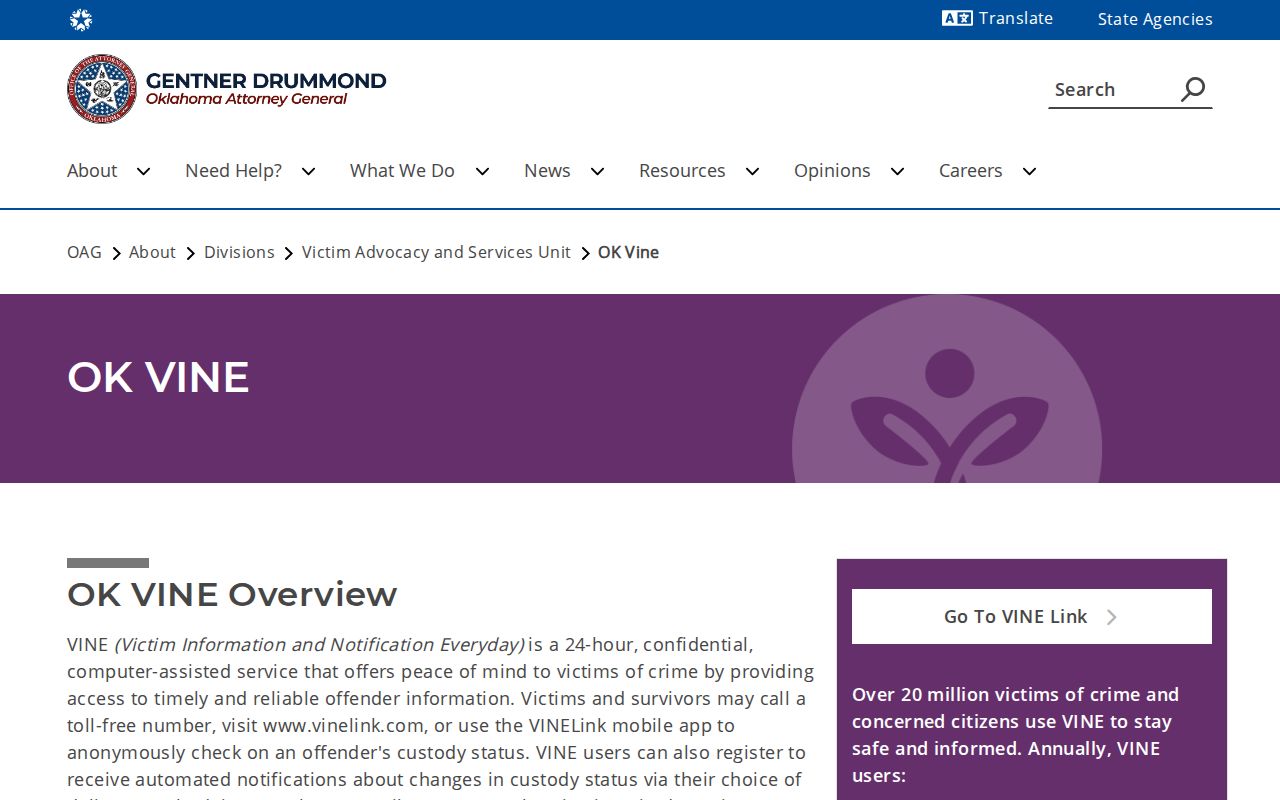
That state source supports the phone and online paths, while the matched person record supplies the agency-specific event.
Search Washita County VINELink Records
Begin with one person and one likely custodian. Use the exact name, a known identifier, and other displayed details to separate people with similar names. The search is not complete until the reporting facility matches the last known custody path. A Washita arrest may lead to a Washita County Jail record, while a later state sentence may place the same person in an ODOC record from a prison elsewhere in Oklahoma.
- Open VINELink or its app and select Oklahoma.
- Choose the person or offender search shown in the current interface.
- Enter the exact name and any available ID or secondary identifier.
- Compare identity details and the named reporting agency or facility.
- Open only the matched person's record and read status, location, and latest event.
- Save the retrieval time because a later agency update may change the result.
- Follow any transfer clue to the receiving authority before concluding the person is free.
The VINELink selection screen is the correct starting point for choosing Oklahoma.
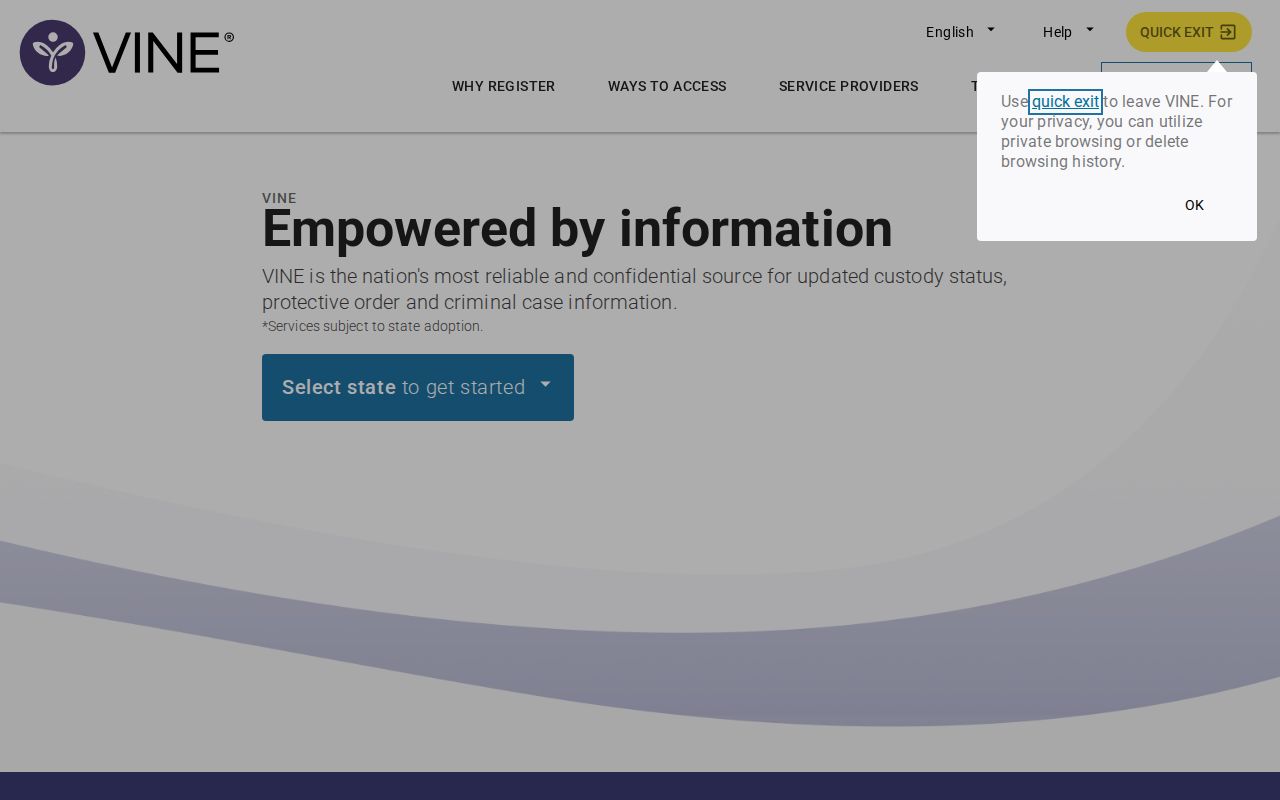
A state selection narrows the database, but the facility name on the final record is what ties an event to Washita County custody.
When no record appears, try spelling variants and check the last known jurisdiction. A no-result may reflect delayed data, a holder that does not feed the service, a different county, or a person who has already left the reporting agency. It is not proof of release.
Read Washita County VINELink Results
A VINELink record is a custody snapshot rather than a full jail register. Fields vary with the agency and the current interface. Read them together. Status without a facility can point to the wrong person, while a facility without a current event may leave the timing unresolved.
| Displayed item | What it can establish |
|---|---|
| Name and identifiers | Whether the result likely belongs to the person being checked. |
| Reporting agency or facility | Which custodian supplied the event and whose custody status ended or changed. |
| Custody status | Whether that agency reports the person in custody, released, or out of custody. |
| Location | The reported holding site, when the agency supplies one. |
| Last event or date | The most recent agency-fed change shown, not necessarily an exact jail-door time. |
| Notification choices | The event types and delivery channels offered for that specific record. |
A court order, bond entry, or case dismissal answers a different question. The Oklahoma State Courts Network may explain why release was authorized, yet it does not provide the precise time the person left the jail. ODOC records are the right path after a state transfer. For a fuller named-person verification chain and local release-record route, use the Washita County released inmate search.
Why Washita County Recommends VINE
Washita County supplies an unusually direct local reason to use VINE. The sheriff's inmate search is expressly limited to people in custody. When a name cannot be found, the page says the system may be updating and directs the user to VINE because the person may have been released or transferred. This is the county's own next step, not a generic substitute added from outside the local record system.
The warning also prevents a common error. Removal from the current roster does not reveal which of the two events occurred. A release transaction may send a person to the community after accepted bond, time served, dismissal, or another legal authority. A transfer can send the same person to ODOC, a sending county, or another custodian. The matched VINE agency and event help separate those paths, but the jail's release or transfer record remains the best source for the actual time, reason, and destination.
When exact facts are needed, the WCSO Records Division is the county record channel. A focused request can identify the person, booking number, and approximate interval, then ask for the actual release or transfer transaction, authority, destination, and any hold. WCSO does not publish a direct records email, form, fee, promised turnaround, or retention period. Those details should be asked, not assumed. A VINE screen and a county transaction can be kept together because one documents the alert while the other explains the local movement.
Note: Record the roster and VINE search times so the jail can reconcile an update that arrives after either check.
Set Washita County VINELink Alerts
Notification registration should start from the correctly matched record. A broad name search alone is not enough. The available custody events and channels can differ by record, so follow the options displayed for that person rather than assuming every agency offers the same set.
- Open the matched record and select Register or Notifications.
- Choose the custody events offered, such as release or transfer.
- Select phone, text, email, in-app, TTY, or another displayed channel.
- Enter the destination details and complete the requested confirmation.
- For phone notices, create or enter the PIN requested by VINE and use it to acknowledge the call.
- Keep the confirmation and update contact information when it changes.
- Recheck the record if an alert is late, unclear, or describes a transfer.
Older instructions refer to a four-digit phone PIN, but the current Oklahoma overview does not state a fixed length. The live prompt controls. Text, email, and app registration may instead require a link, code, or other confirmation. Keep those details private and available so an alert can be acknowledged.
Near-real-time does not mean instant. The reporting agency must first enter or send the event. A transfer, detainer, or urgent court matter should be confirmed with the relevant agency instead of waiting on one automated message.
Washita County VINELink Boundaries
VINELink is not the correct database for every person who once appeared in Washita County. It is not the Bureau of Prisons locator, ICE Online Detainee Locator, or a court disposition system. Those systems have different coverage and meanings. A federal result must be checked through BOP, while a current immigration custody question belongs in ICE ODLS. A district court case is searched in OSCN.
| Custody question | Correct channel |
|---|---|
| Washita County Jail event | Matched Oklahoma VINE record, jail confirmation, and WCSO release or transfer record. |
| Oklahoma state sentence | ODOC offender information plus VINE when that ODOC record offers alerts. |
| Federal prison history | BOP Inmate Locator and federal records, not VINELink. |
| Current ICE detention | ICE ODLS or its information line, not a VINE no-result. |
| Legal case outcome | OSCN and a certified court record, not a custody alert. |
The BOP record guide explains federal released-status fields and why they should not be read as Oklahoma VINE events. Likewise, an ODOC parole status means community supervision, not full sentence discharge. Each system should be used only for the custody it reports.
Confirm Washita County VINELink Releases
A careful confirmation starts with the named VINE agency, then checks the source that owns the next question. Call Washita County Jail when present physical custody matters. Ask WCSO Records Division for an existing release or transfer transaction when the actual timestamp, authority, or receiving agency is needed. Search OSCN for legal context. If the event points to ODOC, compare the state status and facility before treating the county event as community release.
Three terms help keep the result clear. Custody status describes whether a named agency reports that it holds the person. Release ends that agency's hold under a stated authority. Discharge usually means a sentence or supervision term has ended, though the exact record controls. A person can be released from one jail without being discharged from an ODOC sentence, and can leave confinement on parole while the sentence continues under supervision.
A detainer is a request by another authority to hold or receive a person. It can prevent community release even when one case ends. The same is true of a transfer. VINE can flag a custody change, but only the sending and receiving records resolve the full chain.
For a safety concern or a parole-related notice, retain the VINE confirmation and maintain any separate PPB notification registration. For a formal record question, use the originating agency. This keeps a useful alert in its proper role: prompt notice of an agency-fed event, followed by source-level verification.